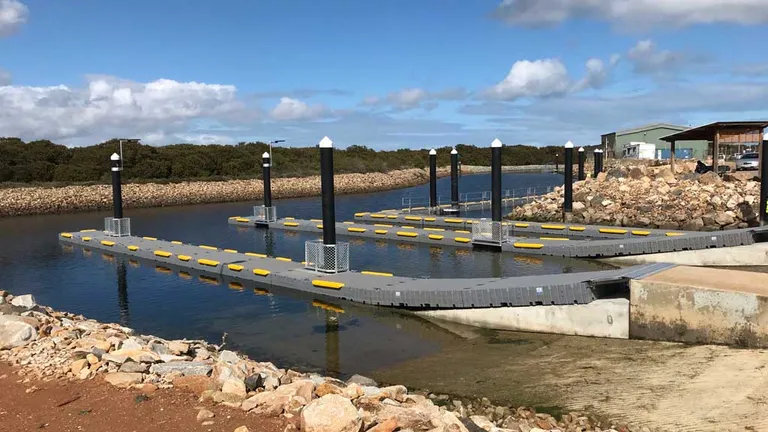
When designing pontoon berthing and mooring facilities, a successful project hinges on several factors, from the technical aspects of engineering to the human element of stakeholder engagement.
When designing pontoon berthing and mooring facilities, a successful project hinges on several factors, from the technical aspects of engineering to the human element of stakeholder engagement.
At Magryn, we understand that creating a robust, adaptable solution requires more than just building infrastructure: it’s about integrating the needs of diverse user groups, ensuring compliance with regulatory standards, and respecting the natural coastal environment.
Versatile Design for Multiple User Groups
Pontoon facilities serve a wide array of users, ranging from commercial vessel operators to recreational boaters, fishing enthusiasts, and passengers with mobility challenges. Engineering designs must accommodate this diversity, ensuring that the pontoon is functional, safe, and accessible for all.
One key element in achieving this is integrating adaptable mooring systems that can support various vessel sizes and types. This includes designing berthing arrangements with flexible layouts, enabling the facility to manage both short-term and long-term docking needs.
Furthermore, consideration must be given to user safety and convenience, such as the incorporation of clear signage, protective barriers, and ample lighting to enhance the overall user experience.
Stakeholder Engagement: A Critical Component
The success of pontoon projects is also rooted in effective collaboration with stakeholders. This involves working closely with local authorities, regulatory bodies, community groups, and end-users throughout the design and construction phases. Engaging with stakeholders helps ensure the facility meets both current and future needs, and addresses potential concerns early in the process.
At Magryn, we prioritise open communication with all stakeholders to ensure that our pontoon facilities reflect the needs of the community while adhering to legislative requirements.
This collaboration fosters trust and ensures that the design aligns with environmental and safety standards, while also accommodating any unique local concerns, such as seasonal use variations or community-driven design preferences.
Achieving DDA Compliance
Designing pontoon berthing facilities with inclusivity in mind is not only a legal requirement under the Disability Discrimination Act (DDA) but also a commitment to providing equitable access to all users. This can be particularly challenging in environments where tidal variations and coastal processes impact the structure and usability of the pontoon.
Magryn approaches DDA compliance by carefully considering gradient slopes for ramps, ensuring they meet the standards even during fluctuating tidal conditions.
We integrate features like handrails, non-slip surfaces, and clear transitions between different areas of the pontoon. These elements work together to create an accessible environment that caters to individuals with mobility impairments, while maintaining safety and usability for all users.
Accounting for Tidal Variations and Coastal Processes
Tidal variation is a significant factor in coastal engineering, and pontoon designs must be resilient to these fluctuations. The facility must accommodate the rise and fall of water levels while remaining functional, safe, and stable.
To achieve this, we often employ floating pontoon designs that rise and fall with the tide, ensuring constant access regardless of water levels. This design consideration also extends to the positioning of access points, gangways, and mooring systems, which must be adjustable to suit the changing tides.
Coastal processes, such as wave action, sediment movement, and erosion, must also be accounted for in the engineering design. At Magryn, we use detailed environmental assessments to understand how these natural forces will interact with the pontoon and surrounding infrastructure.
This allows us to incorporate solutions such as breakwaters, protective barriers, or reinforced materials that minimise the impact of coastal erosion and wave action on the facility’s longevity and safety.
Conclusion
Engineering pontoon berthing and mooring facilities is a complex process that requires a delicate balance between technical design, stakeholder needs, and environmental factors. At Magryn, we are committed to delivering solutions that are versatile, accessible, and sustainable.
By engaging with stakeholders, adhering to DDA compliance, and accounting for the dynamic nature of coastal environments, we create pontoon facilities that serve communities effectively for years to come.
If you’re planning a pontoon project, get in touch with Magryn to ensure your facility meets the highest standards of design and functionality.