
Seawall Design, Rose Bay, NSW
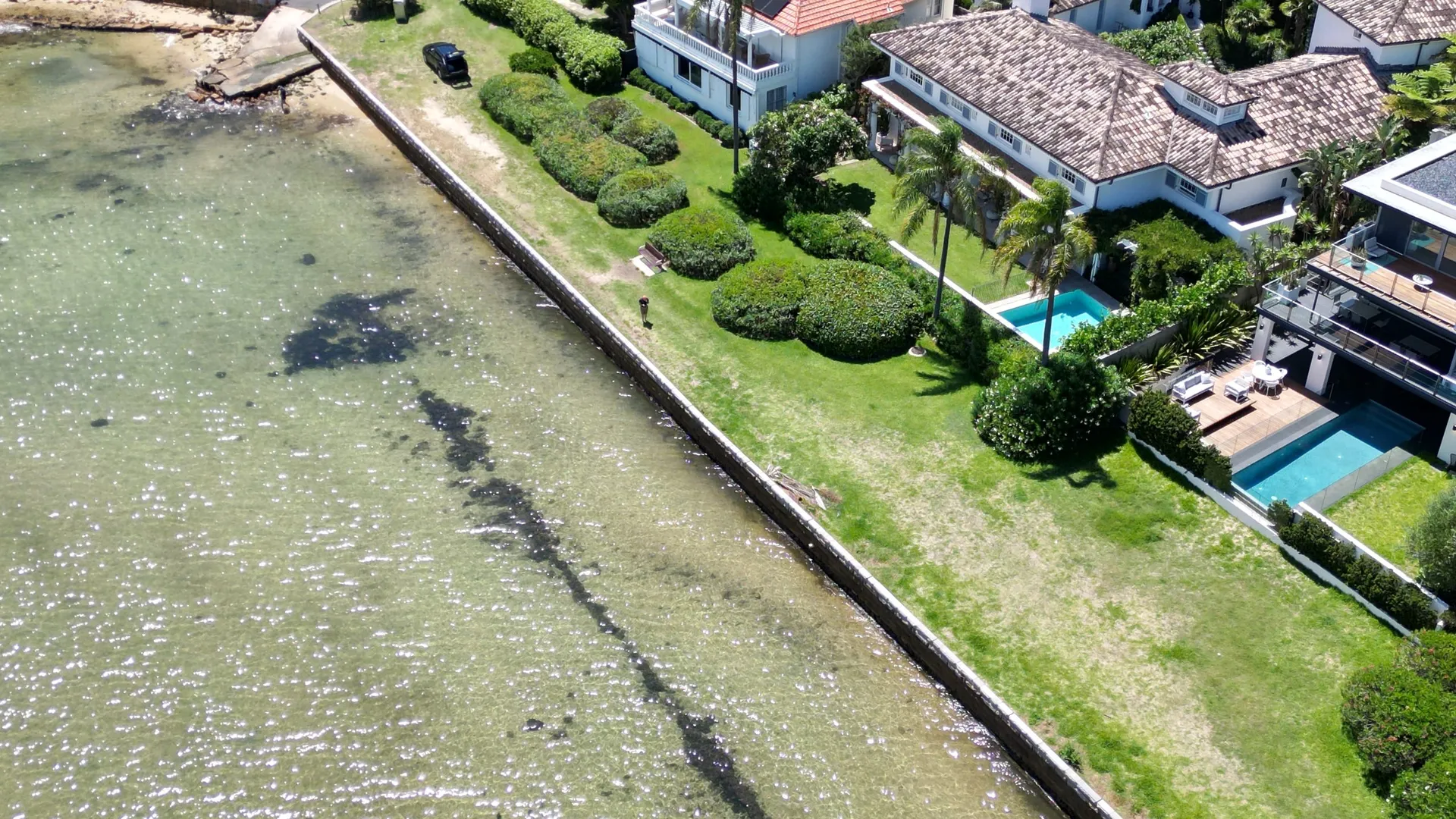
Coastal adaptation study and detailed seawall design for Dumaresq Reserve at Rose Bay, protecting the reserve from ongoing erosion and storm overtopping while improving public access to the foreshore.
The challenge
The seawall at Dumaresq Reserve had been deteriorating for years. Ongoing erosion had undermined the structure, storms regularly overtopped it into the reserve, and the adjoining concrete ramp had reached the end of its serviceable life. The beach in front of the reserve continued to narrow, leaving the seawall increasingly exposed and placing the reserve and the public assets behind it at growing risk from future storms and rising sea levels. Woollahra Municipal Council engaged Magryn to find a solution that would protect the reserve for the long term while keeping it open and welcoming for the community.
Our approach
Rose Bay has no measured wave record, so the conditions the wall had to survive were established before anything was drawn. Topographic and bathymetric survey across the bay, 75 years of shoreline movement and numerical modelling of the local wind waves and sediment transport were built into one picture of the site. Survey put the crest of the existing wall below the storm water level a westerly event can already produce, and the shoreline record showed Dumaresq Reserve to be the only stretch of Rose Bay still losing sand, drifting steadily to the south. Boreholes at the crest and toe found loose sands and voiding behind the wall, which ruled out shallow footings and put the reconstructed structure on deep piles. Because the coastal process work and the structural assessment were read against each other rather than in sequence, the answer had to do more than raise a crest. Return wall options were compared in computational fluid dynamics to find the geometry that best limits overtopping into the reserve, and beach measures were designed in to slow the sand loss that had been undermining the wall in the first place.
The outcome
The detailed design delivers an upgraded seawall built for the wave conditions and sea levels expected across its design life, with a raised crest and wave return wall to keep storm overtopping out of the reserve. Beach access is rebuilt into the structure itself, replacing the deteriorated ramp and improving public access to the foreshore. Stormwater outfalls are integrated into the new wall, and soft engineering measures on the beach work with natural sediment movement to help hold sand in front of the reserve. Together these measures give Woollahra Municipal Council a resilient, long term solution that protects Dumaresq Reserve and preserves its value as public open space.
Similar work
Talk to us about a similar project, or browse more of our work.