
Snug Beach Access Ramp and Erosion Protection
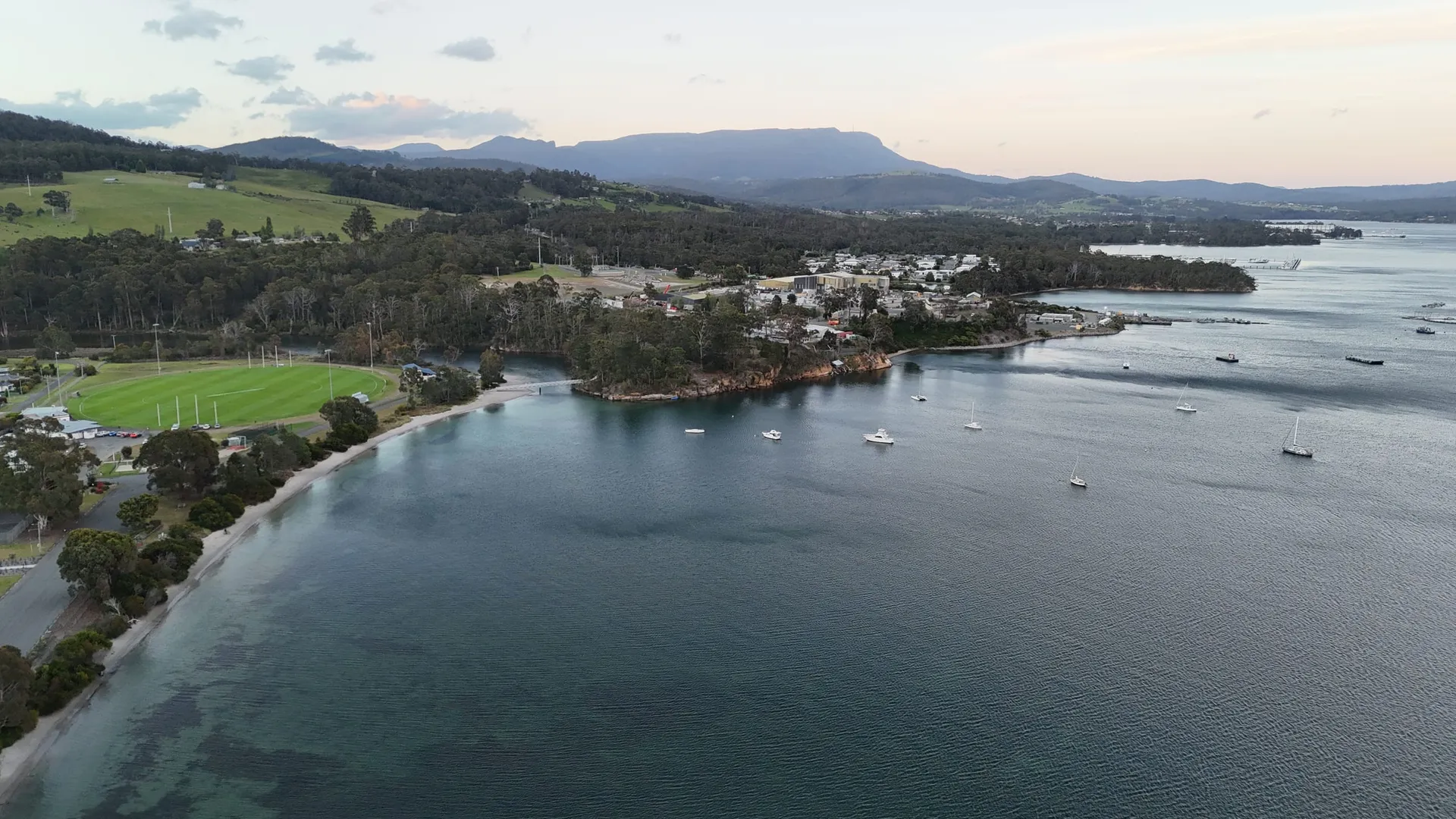
Detailed design of a beach access ramp and erosion protection at Snug Beach in southern Tasmania, replacing a failed access point with a modular structure that can be adapted or relocated as the shoreline recedes.
The challenge
Snug Beach sits on the sheltered western shore of Northwest Bay in south east Tasmania, a low energy beach backed by vegetated dunes and a foreshore carpark that draws steady public use. Elevated water level events had eroded and broken up the formal beach access point beside the carpark, and with the nearest alternative more than 60 metres away, people were cutting their own tracks down through sensitive coastal vegetation to reach the sand. That informal traffic was compounding the damage to the dune at a site already identified as a high priority for coastal hazard adaptation, with a clear shoreline recession trend. Kingborough Council needed access restored quickly and safely, but a conventional fixed structure carried its own risk: it could be undermined by the same recession, or lock the site into a position at odds with the managed retreat approach adopted for the beach. Magryn was engaged to design beach access and erosion protection that would work now and still make sense as the shoreline moves.
Our approach
Snug Beach is low energy and the loads on a small access ramp there are modest, but the sand the structure has to stand in will not stay put. That constraint had to be quantified before any structural form could be fixed, so site inspection and survey were combined with a review of the geomorphology and long term shoreline records for Northwest Bay, LiDAR and monitored profile data, and modelling of both short term storm erosion and the longer term recession driven by sea level rise. What came back, a design beach level and an erosion allowance, went straight into the structural design. Pile embedment was set for the eroded beach rather than today's sand levels, wave and tidal loading was taken at a 100 year storm tide, and materials and connections were specified for a very high corrosion coastal environment. The shoreline findings kept redirecting the structure rather than simply preceding it, and it was the expectation of continuing recession that pushed the design away from a fixed form towards a modular one, able to be shortened, modified or relocated as the beach moves. Access to the site pointed the same way, since everything has to be brought in with small plant and installed without disturbing the vegetation either side of the ramp.
The outcome
The design gives Kingborough Council a straight ramp at a 1 in 8 grade running from the carpark to the beach on the line of the old access, restoring a safe, defined route and taking the pressure off the dune vegetation either side. It is built in fibre reinforced polymer with stainless steel fixings on screwpile foundations, a combination that carries the pedestrian and wave loading, holds up in the salt spray environment and can be installed with small equipment and very little disturbance to the foreshore. Its real strength is that it comes apart: the ramp is modular, so 5 metre sections can be unbolted, the piles withdrawn, and the structure shortened, modified or relocated as the shoreline recedes. Geotextile sand containers and reinstated batters protect the ramp locally and reduce scour alongside it, while the toe is embedded below current beach level so the transition onto the sand keeps working as levels change. The result is a beach access structure with a 50 year design life that supports the managed retreat strategy for Snug Beach rather than working against it.
Similar work
Talk to us about a similar project, or browse more of our work.