
St Kilda Boat Channel and Breakwater Upgrade
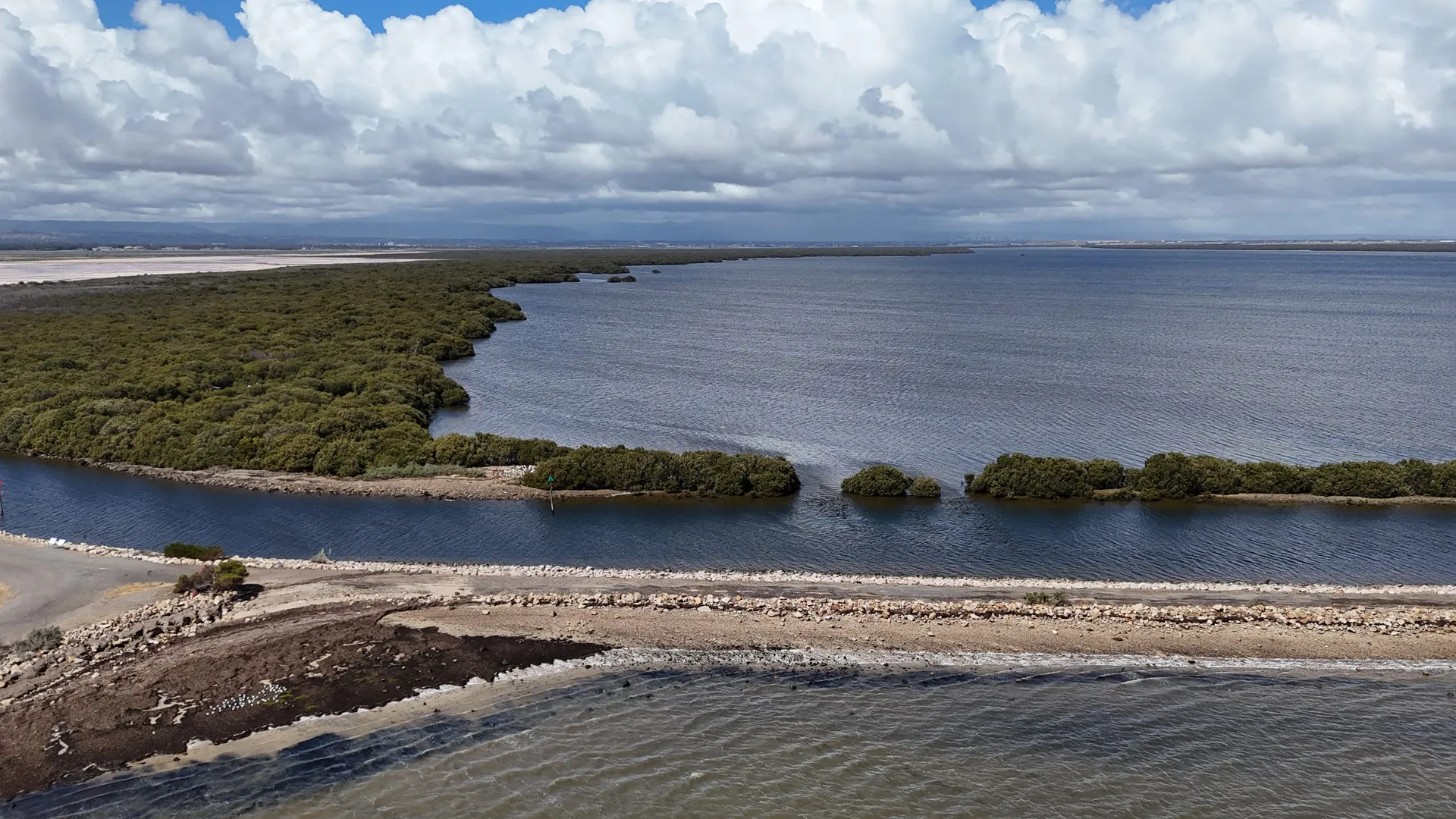
Coastal adaptation assessment and concept design for the St Kilda boat channel and its breakwaters on Barker Inlet, north of Adelaide. The work balances resilience to storms and sea level rise with sediment management and the health of the surrounding estuary.
The challenge
The St Kilda boat channel was cut in the 1960s, giving the boat club and marina direct access to Barker Inlet. Today its breakwaters are showing their age, storms can wash over the northern breakwater and sediment is building up in the channel. The City of Salisbury needed to know what renewal should look like, and any answer had to work within one of the most ecologically significant estuaries in South Australia, where mangroves, mudflats and tidal exchange cannot simply be engineered around.
Our approach
We began with a site inspection and a review of survey levels, tidal records, wave data and historical imagery to understand how the breakwaters and channel are performing. Coastal analysis then assessed how storms and sea level rise affect the structures over the long term, and options for the breakwaters and channel were developed against those results. Tidal exchange with the bay behind was treated as a design constraint from the start, not checked at the end.
The outcome
The assessment gives the City of Salisbury a clear adaptation pathway for the channel. It sets out concept options for upgrading the breakwaters in stages, including a nature-based approach for the southern breakwater, together with measures for managing sediment build-up. Tidal flushing and mangrove habitat are protected as part of the concept, and the report identifies the further work needed to take the preferred option into the next stage of design.
Similar work
Talk to us about a similar project, or browse more of our work.