Designing robust marine infrastructure requires a deep understanding of the forces involved when vessels berth and moor.
Designing robust marine infrastructure requires a deep understanding of the forces involved when vessels berth and moor.
At Magryn, we utilise both Australian Standards and internationally recognised guidelines such as the PIANC fender design guidelines to ensure that marine structures are safe, efficient, and durable.
Whether it's a jetty, wharf, or pontoon, understanding these forces is crucial to providing cost-effective solutions.
Vessel Berthing Forces
As vessels approach a berth, several factors influence the impact on the structure, including the vessel's speed, mass, and angle of approach. These factors generate energy that must be absorbed by the fender system to prevent damage.
Key Design Considerations:
Berthing Velocity: The vessel’s speed directly affects the kinetic energy during berthing. PIANC provides recommendations for velocities based on vessel size and type, guiding us in designing fender systems to absorb the impact energy safely.
Vessel Mass: Larger vessels have higher energy on approach, requiring fender systems that are designed for greater force absorption.
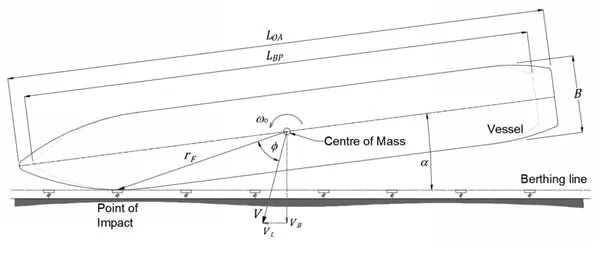
Berthing Angle: The angle at which a vessel makes contact with the fenders is critical. Shallow angles distribute the energy more evenly, while steeper angles focus more force on a smaller area.
Fender Design:
The fender system, acting as a cushion, absorbs the impact of the vessel. By following PIANC guidelines and Australian Standards, we tailor fender systems to the vessel type and local conditions, ensuring the protection of both the infrastructure and the vessel.
Vessel Mooring Forces
After berthing, vessels are subjected to mooring forces from external conditions like wind, currents, and tidal fluctuations. Designing mooring systems that can withstand these forces is crucial for the safety of the vessel and structure.
Key Design Considerations:
Environmental Loads: Wind, waves, tides, and currents impose varying loads on moored vessels. Both PIANC and Australian Standards recommend accounting for the most extreme environmental conditions to ensure mooring systems remain secure.
Mooring Line Setup: Correct positioning and tensioning of mooring lines are vital to distribute forces evenly and prevent overloading on any one point.
Tidal Variability: In areas with significant tidal changes, mooring systems must accommodate the rise and fall of water levels without losing stability.
Berthing motion and corresponding reference angles
Magryn’s Expertise in Fender and Mooring Design
Our commitment to safety, reliability, and sustainability ensures that we provide marine solutions that are not only compliant with international best practices but also tailored to local conditions.
By combining our engineering expertise with state-of-the-art tools and data, Magryn ensures that each marine infrastructure project is designed for long-term operational efficiency and cost-effectiveness.