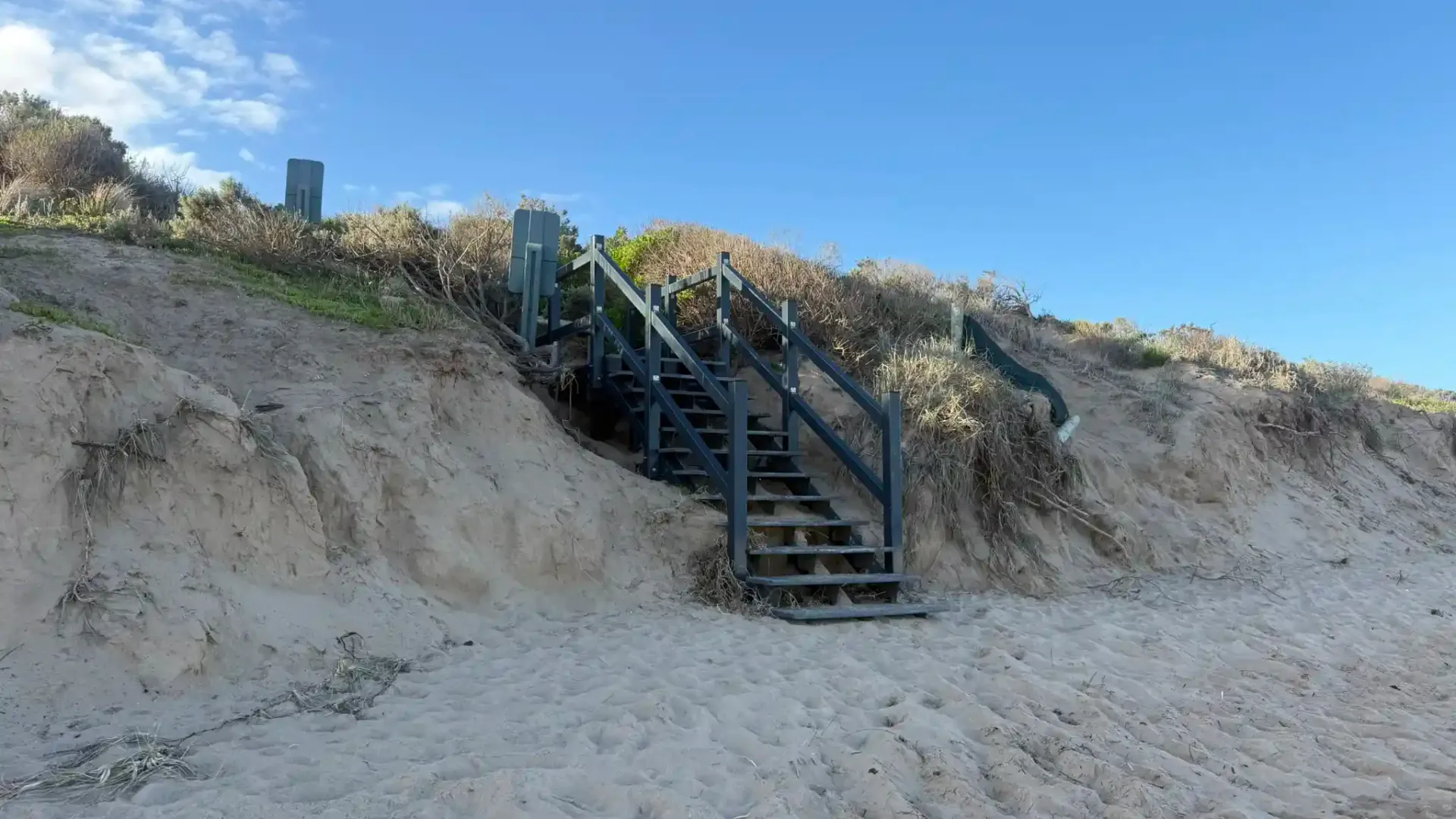
Coastal communities across Australia are facing growing challenges from storm events, coastal erosion, and long-term shoreline change. Ensuring safe and sustainable access to the beach.
Coastal communities across Australia are facing growing challenges from storm events, coastal erosion, and long-term shoreline change. Ensuring safe and sustainable access to the beach.
Whether through ramps, stairs, or boardwalks that require more than just good construction; it demands a deep understanding of coastal processes, climate data, and adaptive design.
At Magryn, we combine coastal science and engineering to create future-proof beach access infrastructure that works with the natural environment.
Integrating Coastal Science and Engineering
Every coastline behaves differently. Wind, waves, sediment transport, and sea-level rise all interact in complex ways. That’s why Magryn’s multidisciplinary team, including coastal scientists and civil and structural engineers, takes a holistic approach to each site.
We undertake detailed:
Coastal hazard and erosion assessments
Long-term shoreline and dune modelling
Hydrodynamic and climate modelling
High-resolution topographic, bathymetric and drone surveys
This data forms the foundation of our design decisions, ensuring that every access structure is positioned and engineered in response to current conditions and future coastal change.
From Reactive to Adaptive Design
Traditional beach access structures are often reactive, rebuilt after storm damage or undermined by gradual erosion. Magryn’s approach is adaptive and predictive, aligning each project with the principles of coastal adaptive management.
We consider:
Erosion buffers and setback zones based on long-term monitoring
Expected storm demand and wave overtopping during design events
Wave pressures on the structure
Lifecycle cost and maintenance planning
This forward-looking approach means that our designs contribute to the broader coastal adaptation strategy of each region, rather than existing as isolated assets.
Materials That Last: FRP vs Traditional Timber
Beach access points often fail prematurely when built with materials that can’t withstand harsh marine conditions. A recent comparison demonstrates the difference clearly:
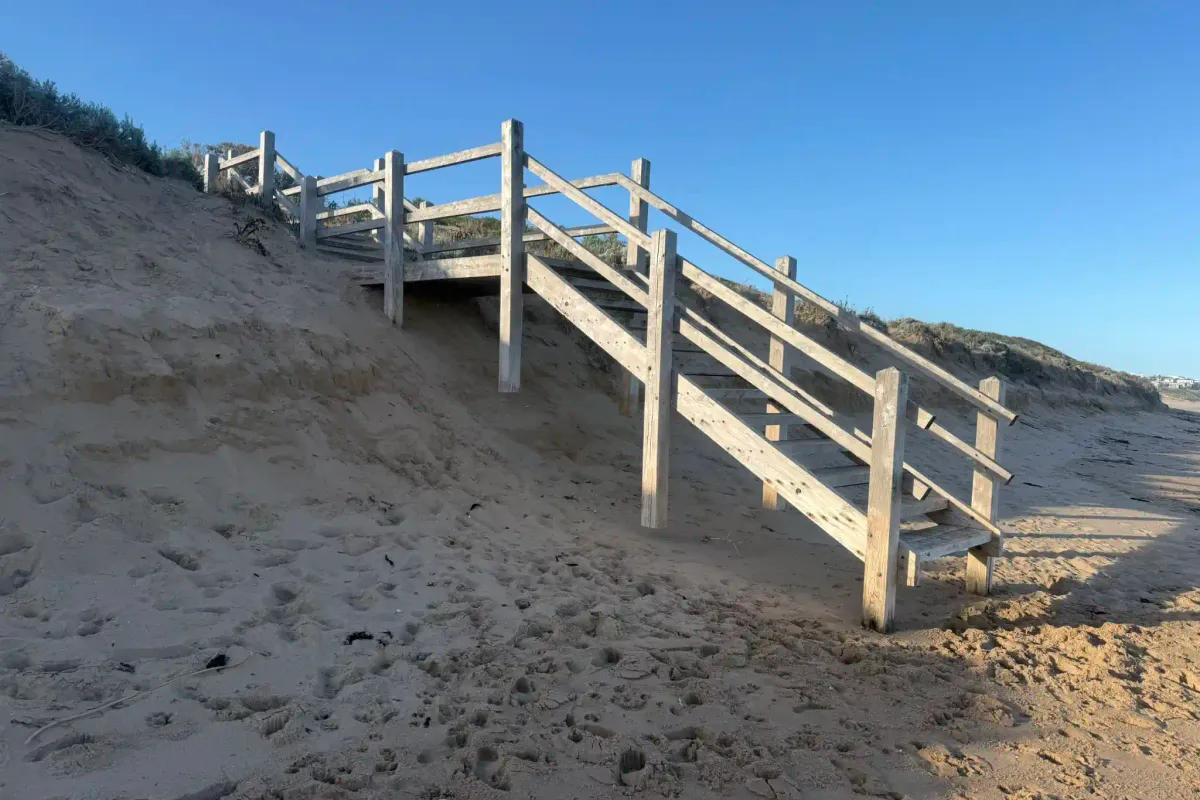
Conventional timber stairs quickly deteriorated due to rot and storm undercutting.
Magryn’s FRP (Fibre-Reinforced Polymer) design, supported by deep piles founded below the expected storm erosion level, remained stable and corrosion-free.
FRP systems are lightweight, modular, and virtually maintenance-free, offering a 50-year design life compared to 10–15 years for timber. Combined with stainless fixings and adaptive footings, these systems provide long-term value and reliability for councils and coastal managers.
Building for the Future
Magryn utilises cutting-edge technology and the latest climate projections to inform every design. This includes:
Advanced numerical modelling of storm and sea-level rise scenarios
Drone-based photogrammetry and LiDAR for site accuracy
GIS-based coastal vulnerability mapping
Integration with state and national climate data frameworks
By applying this science, we ensure that every access structure contributes to a resilient and connected coastline, one that can adapt as the environment evolves.
Connecting Communities and Coastlines
Coastal access is about more than engineering; it’s about connecting people safely and sustainably to the places they love.
Through collaborative partnerships with local councils, coastal managers, and environmental agencies, Magryn delivers access designs that support recreation, tourism, and environmental protection.
Our goal is simple: to create practical, resilient, and environmentally responsive coastal infrastructure that will serve communities and ecosystems for generations to come.