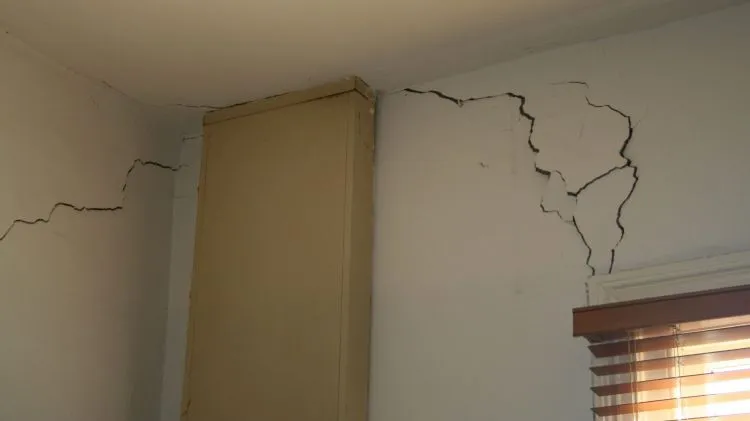
When your home starts to move and crack, the most common thought is that underpinning is required. While underpinning can be an effective solution to stabilise foundation movement, it has certain considerations to keep in mind.
When your home starts to move and crack, the most common thought is that underpinning is required. While underpinning can be an effective solution to stabilise foundation movement, it has certain considerations to keep in mind. In this article, we'll explore if underpinning works, the types of underpinning, and how to choose the best underpinning method for your needs.
Does Underpinning Fix Cracking?
If done correctly, underpinning can be a permanent solution to foundation issues. However, it may only address problems in the specific areas where the underpinning has been installed. We do not necessarily specify underpinning to stop cracking itself; instead, we use it as a tool to arrest subsidence, which may be causing or has led to structural damage.
In cases where a house is cracking due to reactive clays swelling and shrinking seasonally, adding a rigid support point (despite providing great support at that specific location) may, in some cases, result in cracking elsewhere.
This happens because the underpinning redistributes the movement throughout the structure, potentially causing new cracks to develop in unsupported areas.
However, underpinning is still often necessary to avoid serious structural issues and prevent further subsidence. It provides critical stability and can be an effective part of an overall solution to foundation problems.
What is under-pinning?
Underpinning is a construction technique that strengthens the foundation of a building by adding support into the ground. Two of the most common underpinning methods are concrete piling and resin injection.
Concrete vs. Resin: Which Underpinning Method is Best?
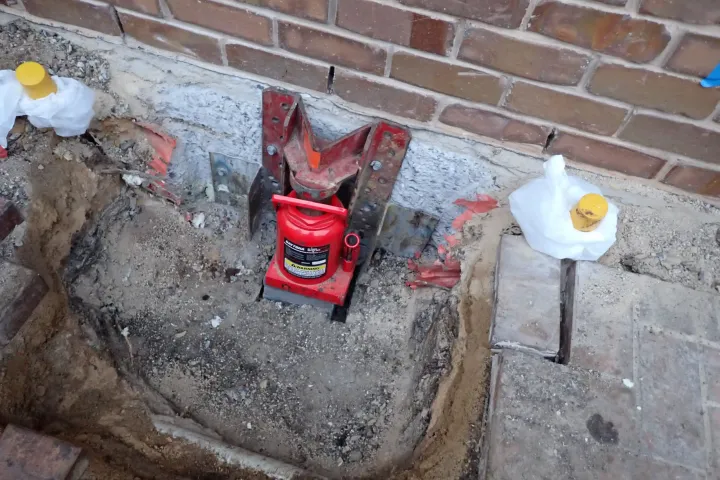
Concrete Underpinning involves excavating soil from beneath the footing to form a pier, usually down to a depth that the soil is no longer affected by seasonal swelling and shrinking.
In the Adelaide region, this can be as deep as 4+ metres. A larger section, called the "pile-cap", is created directly beneath the footing. Once the soil is excavated, the pier is filled with steel reinforcing and concrete, including the pile-cap. The footing can either be jacked up to lift the structure or left as it is.
Resin Injection Underpinning is a more recent and less intrusive technique compared to concrete underpinning. Resin is injected into the soil, where it expands to fill voids and stabilise cracks. This process can also lift the building and provide lasting support.
Which Underpinning Method is Best for Your Foundation?
The best underpinning method depends on the specific conditions of your site. Factors such as the location of the underpins, soil condition, and accessibility all play a role in selecting the optimal underpinning method.
Concrete Underpinning
Concrete Underpinning can be more involved compared to other methods. When performed externally where access is easy, this process is generally straightforward.
However, if access is limited or underpinning is required for internal footings, concrete underpins may not be ideal. Depending on where the pins are located, homeowners may lose access to certain areas during the process.
However, concrete underpinning provides a highly durable and stable solution, particularly suitable for highly reactive clay soils with large swell-shrink potential.
Conclusion: Does Underpinning Really Work?
Underpinning is an important tool for remediation and support of structures that are experiencing movement, helping to stabilise foundations and prevent further movement.
In most cases however, there is an underlying issue that needs to be resolved for the structure to achieve long-term stability. If the root cause of foundation movement is not addressed, the structure may continue to experience subsidence, leading to new cracks in other areas.
Professional Assessment
If you are experiencing foundation movement or cracking in your home, it is essential to get a professional assessment.
Magryn specialises in forensic engineering and can help identify the root cause of foundation issues, providing you with the most effective solution for long-term stability.