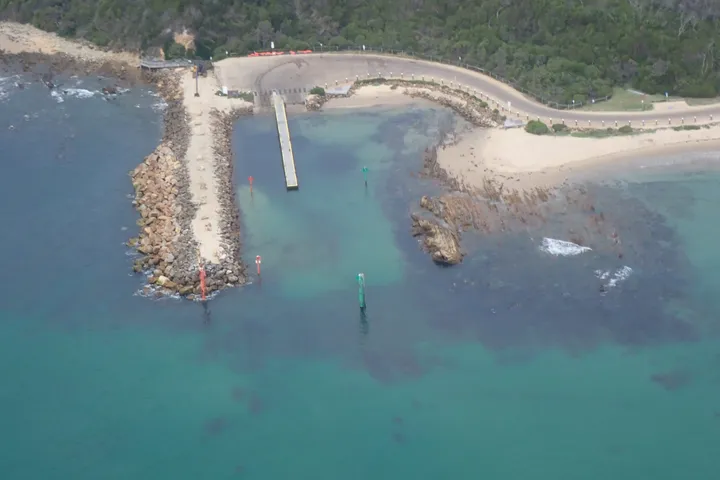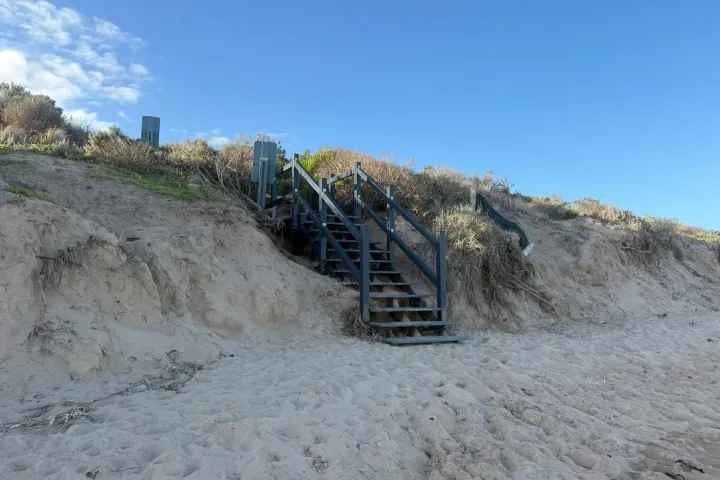
Premature corrosion of reinforcement is a significant issue in coastal environments due to the chlorides present in seawater. As these chlorides diffuse through the concrete, this leads to the corrosion (rusting) of the reinforcement.
Premature corrosion of reinforcement is a significant issue in coastal environments due to the chlorides present in seawater. As these chlorides diffuse through the concrete, this leads to the corrosion (rusting) of the reinforcement.
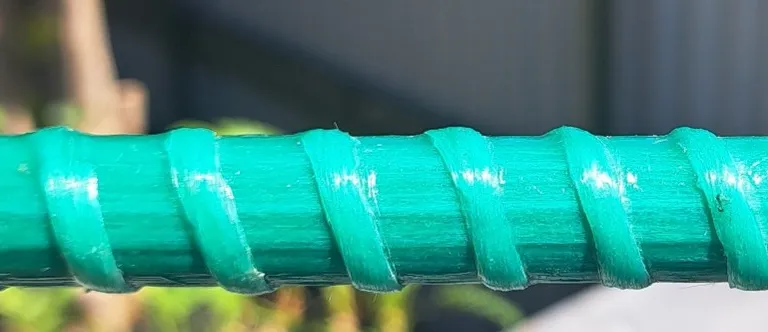
This causes spalling of the concrete and a reduction of the cross-section of the steel leading to failure. An alternative to steel is glass fibre reinforced polymer (GFRP) which does not corrode avoiding these durability issues.
Hence this is ideal for durable concrete structures in the coastal environment such as seawalls, retaining walls and pavements.
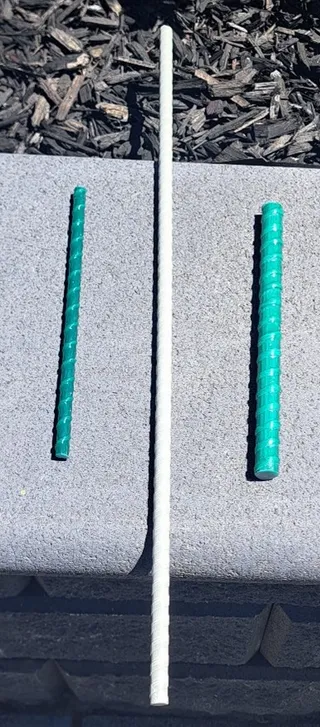
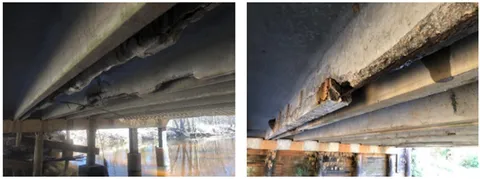
Differences between steel and GFRP
Differences between steel and GFRP reinforcement include:
GFRP has higher strength than steel. 560-1000 MPa vs 500 MPa
GFRP has lower stiffness than steel. 46-60 GPa vs 200 GPa
GFRP is lighter weight than steel 2600 kg/m3 vs 7800 kg/m3
GFRP is brittle and does not yield unlike steel
GFRP may rupture under sustained loads (creep rupture) unlike steel
GFRP cannot be bent on site or welded
The result of this is that GFRP is stronger, lighter and more durable than steel. However, care is required in the design and construction to allow for the unique behaviour of this material.
Magryn’s expertise in GFRP reinforced concrete
Magryn has extensive experience with incorporating GFRP reinforcement into coastal structures including pavements, posts for shade structures and wave overtopping walls.
Our team is experienced with the American (ACI 440.11-22) standards for GFRP reinforced concrete structures. This allows us to develop safe designs which allow for the differences in behaviour between steel and GFRP reinforcement in the absence of an Australian standard.
The usage of fibre reinforced polymers in coastal structures is likely to increase in the future for example carbon fibre reinforced polymer (CFRP) tendons may be used in prestressed applications (Sturm et al. 2020).
References
ACI 440.11-22. Building Code Requirements for Structural Concrete Reinforced with Glass Fiber-Reinforced Polymer (GFRP) Bars- Code and Commentary. American Concrete Institute.
Lin, S.H. (2021). “Analysis and Design of Deteriorated Prestressed Concrete Bridge Beams in Flexure and Shear Repaired with Prestressed Mechanically-Fastened Fiber-Reinforced Polymer.” Ph.D. Thesis, North Carolina State University.
Sturm, A.B., Visintin, P., Seracino, R., Lucier, G.W., & Oehlers, D.J. (2020). “Flexural performance of pretensioned ultra-high performance fibre reinforced concrete beams with CFRP tendons. Composite Structures, 243, 112223.